






When shopping for cannabis products, people often wonder: Does CBD have THC? And it's either because they're concerned about the mind-altering effects of THC or a workplace drug test, or they want to know how CBD and THC might fit into their wellness routine.
Most CBD does have THC in it, but only a very tiny amount. Currently, the federal law on hemp is that it can only contain up to 0.3% THC by dry weight, which is much too little to affect the average person and make you feel "high," but it can sometimes show up on a drug test (Sholler et al., 2022).
You do get some CBD products that have no THC at all, like Cypress Hemp's Broad-Spectrum CBD softgels, but to be certain, you’ll need to do some background checks.
Key Takeaways
- Most CBD products have a trace of THC because the law caps hemp at 0.3%, not at zero.
- Because full-spectrum CBD contains THC, regular use may result in detectable THC levels on a drug test.
- THC is removed from broad-spectrum and isolate CBD products.
- A lab report will tell you more about what a product contains than the label on the bottle.
CBD and THC: Two Cannabis-Derived Compounds From the Same Plant
The cannabis sativa plant has hundreds of different compounds, but there are two that are most well-known: CBD (cannabidiol) and THC (tetrahydrocannabinol). CBD is mostly used for everyday wellness, and THC is the one that causes the mind-altering effects associated with a high.
Similar to popcorn and sweetcorn, they both come from the same plant species but are grown for different reasons. Industrial hemp is grown to make CBD products, with low THC, and other varieties are grown to make THC products that are high in THC (Congressional Research Service, 2019).
So, legally, a bottle of CBD oil could have THC in it too. When the oil is pressed out of hemp, whatever's in the plant goes into the oil. To separate the compounds, it needs to be processed more, and if this step is skipped, there will still be trace amounts of THC. This is why most hemp products with CBD start off with small traces of THC, even though it might not be present in the finished product.

How Does CBD Work in Your Body, and Why Doesn't It Get You High?
-
The Endocannabinoid System
- Your body naturally makes its own cannabinoids, which work with the endocannabinoid system (ECS). This system is involved in things like regulating different processes in the body, like appetite, sleep, mood, and how the body reacts to discomfort (Kurtov et al., 2024)
-
How THC Works
- THC binds to CB1 receptors, found mostly in the brain, and activates them. This is the main reason for the “high” associated with THC (Leo & Abood, 2021).
-
How CBD Works
- CBD doesn't trigger CB1 receptors like THC, but research shows it can affect the receptors (Laprairie et al., 2015).
-
Why CBD Doesn't Get You High
- Because CBD doesn't directly trigger the receptors in the brain, it doesn't cause the same high.
The research by Laprairie et al. (2015) was done on lab cells, not humans, so it might explain how CBD influences receptors, but it doesn't completely explain its effects on the human body.
How Much THC Is in CBD Oil and Other CBD Products?
The Food and Drug Administration (FDA) (2024) says that under the 2018 Farm Bill, a plant is considered hemp if it contains no more than 0.3% THC by dry weight. Anything above this amount is not considered hemp, according to federal law.
The 0.3% is an upper limit, and most full-spectrum CBD products contain THC concentrations well below this limit.
If you want to find the amount of THC a product contains, it's more worthwhile to look at the milligrams than the percentage. That's because the 0.3% amount limits how much THC is in the plant, but the milligram amount shows what's actually in the bottle you buy. You'll find this number on a product's lab report, called a Certificate of Analysis (COA).
Approved CBD products come in many formats; for example, you have CBD oils you put under your tongue, softgels, capsules, topicals you rub into the skin, and CBD and THC gummies. And this rule applies to all of them.
Where the 0.3% Limit Came From
Interestingly, this amount isn't a safety threshold, and it was never meant to be one. It goes back to a 1976 paper by two botanists, Arthur Cronquist and Ernest Small, who decided to separate Cannabis plants into two groups, according to their chemical characteristics. They then "arbitrarily" used the 0.3% figure as a dividing line (Small & Cronquist, 1976).
This amount was then used to legally distinguish between cannabis and hemp in the United States, and eventually, it became part of federal law. So, in other words, that 0.3% was a botanical classification and not a measure of how much THC is considered safe.
Full-Spectrum, Broad-Spectrum, and Isolate: Which CBD Products Have THC?
The first step is to look for the term listed on the label: it will either say broad-spectrum, full-spectrum, or isolate. This tells you what types of hemp compounds are in the product.
- Full-Spectrum CBD: Full-spectrum products contain CBD, trace amounts of THC, and other naturally occurring hemp compounds, for example, cannabinoids like CBG and CBN and terpenes (which give the plant aroma, flavor, and effectiveness). If you want to know more, read our guide: What is full-spectrum CBD?
- Broad-Spectrum CBD: Broad-spectrum CBD mostly has the same hemp compounds that full-spectrum does, but during an extra step of processing, the THC is removed. If a lab report says that the THC is non-detectable, it means it is below the lab's detection limit, but not necessarily that it contains zero THC. This is how broad-spectrum CBD products are formulated.
- Isolate: Isolate contains CBD that's been separated from the other compounds. It's got the lowest chance of exposure to THC, but it also means there's less of the other cannabinoids and terpenes that are in broader-spectrum extracts.
There is also some research on whether cannabinoids and other hemp compounds interact when they're taken together, which is called the entourage effect; but the research around this is still developing (André et al., 2024).
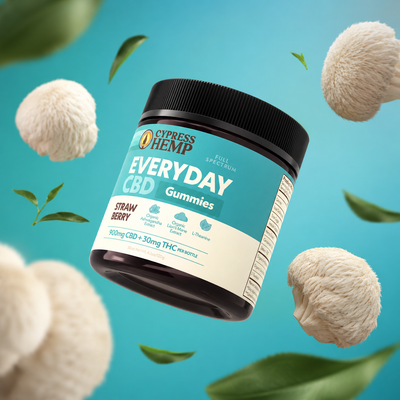
Full Spectrum CBD
Consistent, approachable, and easy to reach for every day
Shop NowDoes CBD Show Up on a Drug Test?

Workplace urine tests aren't designed to look for CBD; they're designed to look for what's left over after your body processes THC, which is known as metabolites. That's why CBD on its own isn't likely to trigger a drug test, but trace THC might.
In a 2020 study, 18 adults were given 100 mg of CBD with no THC, and their urine was tested repeatedly over the next few days. Out of the hundreds of urine samples, pure CBD caused zero confirmed positive drug tests for THC. The same participants were then given cannabis with 3.7 mg of THC and multiple participants tested positive on drug screens (Spindle et al., 2020).
The takeaway is that CBD itself is not likely to trigger a positive urine test, but a CBD product with even small amounts of THC might.
It also comes down to what works best for you. If you want to avoid THC because of workplace drug testing, broad-spectrum is for you (Cather & Cather, 2020). If trace amounts of THC don't bother you, full-spectrum is for you because it has more of the compounds naturally found in hemp.
What Happens With Daily Use?
A single dose isn't really a risk; it's more about the build-up. Because full-spectrum CBD has THC, regular use may result in detectable levels on a drug test.
Small amounts of THC taken every day collect in body fat and are expelled slowly. Think of it like a bath full of water with the plug not quite plugged in. When you pour in more water, the level rises, even though some drains away.
In a 2021 clinical trial, 14 adults were given a full-spectrum hemp product every day for four weeks, which totaled approximately 0.80 mg of THC per day. At the end of the study, 7 of the 14 tested positive for THC in a urine test (Dahlgren et al., 2021), which shows that everyone reacts differently.
If You're Tested at Work
If a positive result could cost you your job, it doesn't make sense to rely on an "unlikely" positive. In this situation, it's better to choose an isolate or broad-spectrum product, and read the lab report before you take it.
For a lower-risk route, opt for an organic broad-spectrum CBD oil or broad-spectrum CBD softgels with an up-to-date report showing non-detectable THC.
Why Some CBD Products Have More THC Than the Label Says
Unfortunately, independent testing has shown that many CBD products' labels aren't always reliable.
To test this, a research team bought 84 CBD products from 31 different companies and analyzed them in a lab. The team found that around 7 out of 10 products were incorrectly labeled, and about 1 in 5 had THC, even though it wasn't stated on the label (Bonn-Miller et al., 2017).
The FDA found similar evidence. In a 2020 report to Congress, it said it tested 147 CBD products and found THC in about half of them, often without it being labeled. The Centers for Disease Control and Prevention (2025) also said that some hemp or CBD products might contain heavy metals, pesticides, fungi, or bacteria.
This doesn't mean that every brand is careless about purity and shouldn't be trusted; what it means is that it's important to check the lab tests before buying.
Note: If you're concerned about unsafe manufacturing practices, at Cypress Hemp, all our CBD and THC products are tested by independent third-party labs for transparency and reliability. We also make our lab results available so you can check what's really in a product before you buy it. This is what helps ensure our products are top-quality, consistent, and clean.
How to Read a Lab Report
A certificate of analysis (COA) confirms what's in a product, and reputable brands (like us) will publish a current report for every batch made. Here's what to look for:
- The Batch Number: The number on your product should match the one on the report.
- The Date: A report shouldn't be more than two years old.
- The Lab: The testing lab should be an independent third party, and not the brand itself.
- The Delta-9 THC Amount: This is given as a percentage or in milligrams per serving. "Non-detectable," often written as ND, means the lab couldn't find any THC.
- The Contaminant Panels: A thorough report will also cover what leftover solvents, pesticides, and heavy metals a product contains.
What the Research on CBD Use Actually Shows
Prescription Medication
So far, one prescription medicine containing purified CBD, called Epidiolex, has been approved by the FDA. It's used to treat rare types of epilepsy (Dravet and Lennox-Gastaut syndromes) and tuberous sclerosis complex, a genetic disorder (FDA, 2024).
Thanks to federal law, hemp-derived CBD products are legal to buy and sell across the United States as long as they contain 0.3% THC or less. While CBD products are marketed as wellness supplements rather than FDA-approved medicine, many people still make them part of their everyday wellness routines.
Sleep and Other Uses
Many people choose CBD and THC products as part of their evening routine to help them wind down. Creating some space at the end of the day for self-care rituals can make all the difference in getting a good night’s rest. Cypress Hemp has helped tens of thousands of people find that much-needed calm, deep relaxation, and a good night's sleep too.

CBD and THC Safety
Reactions and Other Medications
In general, CBD is very well tolerated, but there are some side effects to be aware of. According to the CDC (2025), the following can occur:
- A change in appetite
- Sleepiness/drowsiness
- Digestive problems, diarrhea, etc.
- Irritability and mood fluctuations
- Possible liver damage
CBD may also interact with some prescription medications, so it’s important to be aware and speak to your healthcare provider.
The liver needs enzymes to break down many medications, and CBD might affect how some of those enzymes react, so some medications might stay in your body at lower/higher levels than planned (CDC, 2025).
Grapefruit
You might have heard similar warnings about grapefruit. Both grapefruit and CBD can slow the liver enzymes that help break down many common medications, potentially affecting how they work. So, if your medication has a grapefruit warning, it's also a good idea to talk to a healthcare professional before taking it with CBD (Brown & Winterstein, 2019).
CBD, Pregnancy, and the Developing Brain
The truth is, there's not enough evidence yet regarding CBD and pregnancy. The CDC advises against using CBD during pregnancy (and encourages avoidance during breastfeeding) because the effects on children's brains are unknown (CDC, 2025).
Note: Hemp products are for adults over the age of 21. Don't drive or operate machinery after taking anything containing THC.
Is CBD Legal? Federal and State Laws
Hemp and its compounds, including hemp-derived CBD, were removed from the federal Controlled Substances Act after the 2018 Farm Bill was put in place (Congressional Research Service, 2019). Currently, hemp can't contain more than 0.3% delta-9 THC by dry weight, but the rules are changing. Under rules set to take effect in December 2026, hemp will be tested for total THC, which includes both delta-9 THC and THCA (which turns into delta-9 THC when heated), so it will increase the concentration of THC (Bowdring et al., 2026).
States can also make their own rules and set restrictions on how CBD products are made, sold, and labeled. If you're unsure of the laws in your state, add a product to your cart, and our checkout system will automatically verify if the products can be legally shipped to your location.
Anything above the 0.3% delta-9 THC threshold falls under the Controlled Substances Act (Bowdring et al., 2026).
FAQs
Can CBD Get You High?
No, CBD doesn't have the mind-altering (psychoactive) properties that THC has, so it doesn't give you a high, even with trace amounts (Spindle et al., 2020). A large dose of full-spectrum might contain enough THC for you to feel "something" but not necessarily a "high."
How Long Does Trace THC Stay Detectable After You Stop Using It?
THC is fat-soluble, which means that some of it is stored in body fat and released slowly, and regular users might test positive for longer than occasional users do (Sholler et al., 2022).
THC can be detected in drug screenings 15-60+ days after consistent usage. It mostly depends on the following factors:
- How much THC you use
- How often you use THC
- The type of test
- Your individual body make-up
(Sholler et al., 2022)
CBD and THC – the Bottom Line
If CBD is part of your wellness routine, knowing what’s actually in your product can help you find the right fit. Full-spectrum CBD has trace amounts of THC, so broad-spectrum may make more sense if you’d rather avoid it. Ultimately, what's most important when purchasing CBD products is to check what's on the lab report and not what's written on the label, so you know exactly what you’re adding to your routine.
Note: These statements haven't been evaluated by the FDA. This product is not intended to diagnose, treat, cure, or prevent disease.
References
- André, R., Gomes, A. P., Pereira-Leite, C., Marques-da-Costa, A., Monteiro Rodrigues, L., Sassano, M., Rijo, P., & Costa, M. d. C. (2024). The entourage effect in cannabis medicinal products: A comprehensive review. Pharmaceuticals, 17(11), Article 1543.
- Bonn-Miller, M. O., Loflin, M. J. E., Thomas, B. F., Marcu, J. P., Hyke, T., & Vandrey, R. (2017). Labeling accuracy of cannabidiol extracts sold online. JAMA, 318(17), 1708–1709.
- Bowdring, M. A., Mian, M. N., Young-Wolff, K. C., & Prochaska, J. J. (2026). Federal and state gaps in regulation of hemp-derived delta-9-tetrahydrocannabinol beverages. American Journal of Preventive Medicine, 70(2), Article 108181.
- Brown, J. D., & Winterstein, A. G. (2019). Potential adverse drug events and drug–drug interactions with medical and consumer cannabidiol (CBD) use. Journal of Clinical Medicine, 8(7), Article 989.
- Cather, J. C., & Cather, J. C. (2020). Cannabidiol primer for healthcare professionals. Baylor University Medical Center Proceedings, 33(3), 376–379.
- Centers for Disease Control and Prevention. (2025). About CBD. U.S. Department of Health and Human Services.
- Congressional Research Service. (2019). Defining hemp: A fact sheet (Report No. R44742).
- Dahlgren, M. K., Sagar, K. A., Lambros, A. M., Smith, R. T., & Gruber, S. A. (2021). Urinary tetrahydrocannabinol after 4 weeks of a full-spectrum, high-cannabidiol treatment in an open-label clinical trial. JAMA Psychiatry, 78(3), 335–337.
- Florian, J., Salcedo, P., Burkhart, K., Shah, A., Chekka, L. M. S., Keshishi, D., Patel, V., Yang, S., Fein, M., DePalma, R., Matta, M., Strauss, D. G., & Rouse, R. (2025). Cannabidiol and liver enzyme level elevations in healthy adults: A randomized clinical trial. JAMA Internal Medicine, 185(9), 1070–1078.
- Food and Drug Administration. (2019). What you should know about using cannabis, including CBD, when pregnant or breastfeeding. U.S. Department of Health and Human Services.
- Food and Drug Administration. (2020). Report to Congress: Sampling study of the current cannabidiol marketplace to determine the extent that products are mislabeled or adulterated. U.S. Department of Health and Human Services.
- Food and Drug Administration. (2024). FDA regulation of cannabis and cannabis-derived products, including cannabidiol (CBD). U.S. Department of Health and Human Services.
- Kurtov, M., Rubinić, I., & Likić, R. (2024). The endocannabinoid system in appetite regulation and treatment of obesity. Pharmacology Research & Perspectives, 12(5), e70009.
- Laprairie, R. B., Bagher, A. M., Kelly, M. E. M., & Denovan-Wright, E. M. (2015). Cannabidiol is a negative allosteric modulator of the cannabinoid CB1 receptor. British Journal of Pharmacology, 172(20), 4790–4805.
- Leo, L. M., & Abood, M. E. (2021). CB1 cannabinoid receptor signaling and biased signaling. Molecules, 26(17), 5413.
- Lo, L. A., Heschuk, S. A., & Bougher, P. R. (2023). Cannabidiol and drug-induced liver injury: A systematic review of clinical and preclinical evidence. Journal of Clinical Pharmacology, 63(8), 891–904.
- National Center for Complementary and Integrative Health. (2019). Cannabis (marijuana) and cannabinoids: What you need to know. National Institutes of Health.
- Sholler, D. J., Spindle, T. R., Cone, E. J., Goffi, E., Kuntz, D., Mitchell, J. M., Winecker, R. E., Bigelow, G. E., Flegel, R. R., & Vandrey, R. (2022). Urinary pharmacokinetic profile of cannabidiol (CBD), Δ9-tetrahydrocannabinol (THC) and their metabolites following oral and vaporized CBD and vaporized CBD-dominant cannabis administration. Journal of Analytical Toxicology, 46(5), 494–503.
- Small, E., & Cronquist, A. (1976). A practical and natural taxonomy for Cannabis. Taxon, 25(4), 405–435.
- Spindle, T. R., Cone, E. J., Kuntz, D., Mitchell, J. M., Bigelow, G. E., Flegel, R., & Vandrey, R. (2020). Urinary pharmacokinetic profile of cannabinoids following administration of vaporized and oral cannabidiol and vaporized CBD-dominant cannabis. Journal of Analytical Toxicology, 44(2), 109–125.


