






What is full spectrum CBD? It's hemp extract that retains all the compounds, including CBD, CBG, CBN, terpenes, and THC (the part that causes the psychoactive effects or makes you 'high’ in marijuana, but is only present in trace amounts in full spectrum CBD). It’s the full package. This blog will answer all your questions about full spectrum CBD.
Key Takeaways
- Full spectrum CBD keeps the plant's full range of cannabinoids, terpenes, and flavonoids.
- It contains trace THC, capped at 0.3% by dry weight under federal law, which is far below an intoxicating amount.
- The entourage effect is the theory that all cannabis plant compounds work together to create a better effect.
- Full spectrum can trigger a positive workplace drug test. If you may be tested, broad spectrum or isolate is the safer pick.
- A current third-party lab report matters more than any claim on the front of the bottle.
What Full Spectrum CBD Actually Contains
Full spectrum CBD contains all naturally occurring compounds in the cannabis plant, including cannabinoids, terpenes, and flavonoids. This flowchart will help you understand it better:
Here's more information on the constituents:
- Cannabinoids. CBD (cannabidiol) is the most abundant, and it's followed by other minor cannabinoids like CBG, CBN, CBC, CBDa, and CBDv, plus some THC.
- Terpenes. These are the aroma compounds that give the plant its scent and flavor, and contribute to its effects by working alongside cannabinoids as part of the entourage effect.
- Flavonoids. They contribute to color, flavor, aroma, and also protect the plant from environmental hazards like UV rays, insects, and fungi.
Our full spectrum CBD extract is formulated into a variety of products. Full spectrum CBD products include oils you hold under the tongue, CBD gummies, capsules, and topicals you rub into the skin. These methods of application affect how quickly you feel the effects of the products, how long they last, and whether the effects are felt locally where you apply them or throughout the body.
On the other hand, broad spectrum CBD products don’t have THC but contain other cannabis compounds, while CBD isolates only contain the CBD.
How Much THC Is in Full Spectrum CBD?
Full Spectrum hemp products contain naturally occurring trace amounts of THC, but federally compliant hemp has no more than 0.3% THC. The 2018 Farm Bill defines hemp as cannabis containing no more than 0.3% THC dry weight, which differentiates it from marijuana under federal law (Congressional Research Service, 2019).
The amount of THC per serving varies according to the product and its CBD concentration. For example, a typical 30 mg serving of full spectrum CBD (like Cypress Hemp’s 900mg CBD oil) may contain about 0.5 –1 mg of THC. Higher-strength products, like 1800mg or 5400mg CBD oils containing 60 mg – 180 mg of CBD per serving, may contain about 1 – 2 mg of THC per serving, which helps contribute to increased efficacy through the entourage effect, while remaining within the legal THC limit.
How Full Spectrum CBD Causes Potential Benefits

The first thing you should know is that your body makes its own cannabinoids that interact in a signaling network called the endocannabinoid system (ECS) and affect pain, appetite, sleep, and emotions. Cannabinoids from hemp interact with this system, which is a major reason researchers continue to study their potential wellness benefits. One way to understand this is to think of the ECS as a network of different communication points throughout your body (cannabinoid receptors). These points receive signals to modify how your body cells communicate. THC directly interacts with these points, and that explains its intoxicating effects. However, CBD interacts indirectly with the ECS, which means it has different benefits and doesn't produce the same 'high' as THC.
Researchers believe CBD’s potential benefits may stem from its anti-inflammatory, neuroprotective, and antioxidant effects within the ECS (Singh et al, 2023). However, further research is ongoing to understand the extent of these benefits.
The Entourage Effect, and What the Research Really Says
The entourage effect is the idea that cannabinoids, terpenes, and other hemp compounds may work better together than they do individually. Research is still developing, so it’s best understood as a well-supported theory rather than a guarantee of enhanced efficacy. A 2011 review in the British Journal of Pharmacology discusses the interaction between cannabinoids like THC and CBD, and terpenes, and how they all work hand-in-hand to produce a better effect than acting alone (Russo, 2011).
Researchers have also discovered indications that full spectrum CBD has enhanced efficacy and a broader therapeutic index (Christensen et al, 2023). Treat the entourage effect as a theory that shapes how good hemp products are formulated, not a guarantee of a stronger result.
Full Spectrum vs Broad Spectrum CBD vs CBD Isolate
These three types of CBD reflect how much of the plant survives the manufacturing process. This table should help you understand things better:
Full Spectrum CBD
Full spectrum CBD has cannabinoids, terpenes, and flavonoids, as well as a trace amount of THC content, all working together to create the full entourage effect. This means that there’s a risk of a positive drug test.
Broad Spectrum CBD
Broad spectrum CBD products are THC-free, but still contain other cannabis compounds like minor cannabinoids. Because of this, drug testing risk is low due to lack of THC, and some of the entourage effect is preserved with minor cannabinoids still being present.
CBD Isolate
CBD Isolate is THC-free and contains only CBD. It’s CBD in its purest form. This means there are no terpenes, cannabinoids, or flavonoids to provide the “entourage effect” produced by full and broad spectrum CBD.
How Extraction Methods Shape What Ends Up in the Bottle
Two full spectrum oils from distinct producers can noticeably differ, and the extraction process is usually why. Different extraction processes include CO2, ethanol/alcohol, and live resin extraction. CO2 extraction is the most common method for quality hemp oils; it uses pressurized carbon dioxide to pull compounds from the plant without leaving solvent behind. Ethanol extraction is efficient at scale and needs careful purging afterward. With live resin, the cannabis is frozen immediately after harvest, which preserves the terpene profile of that specific strain instead of losing the volatile compounds to drying and curing. This guide to live resin gummies goes further into how that process works.
Is Full Spectrum CBD Legal?
Yes, full spectrum CBD is legal in the US under the 2018 Farm Bill. However, laws differ by state, so availability depends on your location. Add your products to cart and enter your shipping information to see if we can ship them to your location.
You should also know that the FDA hasn't approved CBD as a dietary supplement, and it hasn't issued CBD-specific regulations for food or supplements (FDA, 2023). That regulatory gap is exactly why the buying advice you'll read next matters so much.
How to Choose the Best Full Spectrum CBD Products

Because federal supplement rules haven't caught up to this category, quality varies more than most shoppers expect. When researchers bought 84 CBD products online and tested them, only about 3 in 10 contained roughly the amount of CBD promised on the label. The remaining products contained substantially more or less CBD than advertised (Bonn-Miller et al., 2017).
Here's what to check.
- A current certificate of analysis. An independent lab report, batch-matched to the product in your hand, showing the cannabinoid breakdown. Cypress Hemp publishes ours on our lab tests page.
- The actual THC number. A full spectrum COA should show THC present but under 0.3%. If it reads 0.0%, that's broad spectrum or CBD isolate being sold under the wrong name.
- CBD per serving, not per bottle. Focus on actual CBD dosage per serving rather than per bottle.
- How the hemp was grown. Organic farming practices and a named growing region tell you more than a leaf on the label. Our full spectrum CBD collection is built on organically grown hemp.
- What else is in the formula. Some hemp products carry the CBD extract in MCT oil, others in hemp heart oil, and some infuse with botanicals like ashwagandha or L-theanine. Our CBD oils use either organic MCT Oil or organic hemp heart oil, which adds omega-3 and omega-6 fatty acids in roughly a 3:1 ratio.
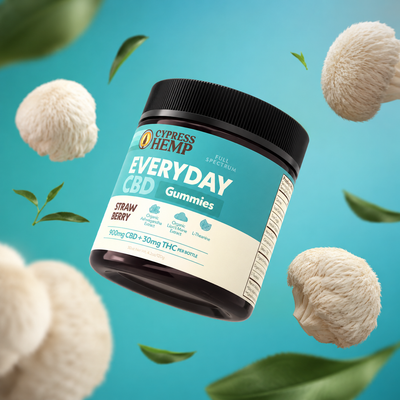
Full Spectrum CBD
Consistent, approachable, and easy to reach for every day
Shop NowFull Spectrum CBD and Drug Tests
Standard workplace drug tests don't look for CBD. They screen urine for a broken-down form of THC called THC-COOH. As you know, full spectrum products contain trace THC, and this can accumulate with daily use to show up in drug tests.
In an open-label trial published in JAMA Psychiatry, participants took a full spectrum, high-CBD extract three times a day for four weeks. Seven of the fifteen participants produced a positive urine screen for THC (Dahlgren et al., 2021). The study product contained only 0.02% THC by dry weight.
Because full spectrum CBD contains THC, regular use may result in detectable THC levels on a drug test, so keep in mind if you have to undergo workplace testing or any kind of monitoring.
Side Effects and Who Should Be Careful
CBD is generally well tolerated. In its 2018 critical review, the World Health Organization concluded that CBD shows a good safety profile in humans (2018). Reported side effects tend to be mild and include drowsiness, reduced appetite, diarrhea, and fatigue.
Two cautions carry more weight than the rest. Medication interactions come first: CBD is processed by the same liver enzymes as many prescription drugs, so it can change how those drugs behave. Talk to your doctor before starting if you take anything regularly. Pregnancy and breastfeeding come second, where there isn't enough safety data and the FDA advises against use.
Hemp products are for adults 21 and over. Do not drive or operate machinery until you know how a full spectrum product affects you.
Frequently Asked Questions
Does Full Spectrum CBD Get You High?
No. The trace THC in a compliant full spectrum product sits below 0.3% by dry weight, which isn't enough to produce intoxication at normal serving sizes. Some people describe feeling more settled, grounded, or physically relaxed, which is different from being high.
Is Full Spectrum CBD Better Than Broad Spectrum?
Better depends on your situation. Full spectrum offers the complete compound profile and the strongest case for the entourage effect. Broad spectrum gives you most of that without the trace THC, which makes it the sensible choice if you're drug tested or prefer to avoid THC entirely.
How Long Does Full Spectrum CBD Take to Work?
An oil held under the tongue is generally felt sooner than a capsule or gummy, which has to pass through digestion in the stomach and intestines first. Onset and duration vary with your body weight, metabolism and whether you've eaten. Many people find consistent daily use over a few weeks tells them more about the benefits than a single serving does.
Can You Take Full Spectrum CBD Every Day?
Daily use is how most hemp products are designed to be taken. Consistent usage often leads to more consistent benefits. Follow the serving size on the label, start at the lower end, and give it time before adjusting. If you're on medication, clear it with your doctor first.
What's the Difference Between Full Spectrum CBD Oil and Hemp Seed Oil?
They come from different parts of the plant and do different jobs. Full spectrum CBD oil is extracted from hemp flowers and leaves and contains cannabinoids. Hemp seed oil is pressed from the seeds and contains essentially no CBD or THC. Our guide to hemp oil vs CBD oil breaks down how to tell them apart on a label.
The Bottom Line on Full Spectrum CBD
Full spectrum CBD is the whole-plant option: cannabidiol (CBD) with the minor cannabinoids, terpenes, and flavonoids hemp produced alongside it, plus the trace THC that comes with keeping the extract fully intact. If you want the full entourage effect and you aren't drug tested, it's the type to reach for. If testing is part of your working life, broad spectrum gives you nearly the same profile without the risk.
Whichever you choose, buy on the lab report rather than the label.
These statements have not been evaluated by the Food and Drug Administration. This product is not intended to diagnose, treat, cure or prevent any disease.
References
- Congressional Research Service. (2019). Defining hemp: A fact sheet (IF11250).
- Singh, K., Bhushan, B., Chanchal, D. K., Sharma, S. K., Rani, K., Yadav, M. K., Porwal, P., Kumar, S., Sharma, A., Virmani, T., Kumar, G., & Noman, A. A. (2023). Emerging Therapeutic Potential of Cannabidiol (CBD) in Neurological Disorders: A Comprehensive Review. Behavioural neurology, 2023, 8825358.
- Russo, E. B. (2011). Taming THC: Potential cannabis synergy and phytocannabinoid-terpenoid entourage effects. British Journal of Pharmacology, 163(7), 1344-1364.
- Christensen, C., Rose, M., Cornett, C., & Allesø, M. (2023). Decoding the Postulated Entourage Effect of Medicinal Cannabis: What It Is and What It Isn't. Biomedicines, 11(8), 2323.
- U.S. Food and Drug Administration. (2023). FDA regulation of cannabis and cannabis-derived products, including cannabidiol (CBD).
- Dahlgren, M. K., Sagar, K. A., Smith, R. T., Lambros, A. M., Kuppe, M. K., & Gruber, S. A. (2021). Urinary tetrahydrocannabinol after 4 weeks of a full-spectrum, high-cannabidiol treatment in an open-label clinical trial. JAMA Psychiatry, 78(3), 335-337.
- Bonn-Miller, M. O., Loflin, M. J. E., Thomas, B. F., Marcu, J. P., Hyke, T., & Vandrey, R. (2017). Labeling accuracy of cannabidiol extracts sold online. JAMA, 318(17), 1708-1709.
- World Health Organization. (2018). Cannabidiol (CBD) critical review report. Expert Committee on Drug Dependence, Fortieth Meeting.


