






Wondering what the difference is between hemp oil and CBD Oil? A lot of people think they’re the same thing because hemp oil and CBD oil both come from the hemp plant. But actually, one is oil pressed from seeds; the other is pressed from flowers. Some brands use the names interchangeably, but average pricing for one is up to 100x more than the other, and they have different uses.
This guide will teach you how to tell one oil apart from the other so you can choose the product you need.
Key Takeaways
- Hemp seed oil is cold-pressed from hemp seeds and contains no cannabinoids. CBD oil is extracted from the flowers and leaves of the hemp plant and contains cannabidiol (CBD).
- "Hemp oil" on a label can mean either one, so check the ingredients and the milligrams rather than the product name.
- Hemp seed oil is a nutritional oil, rich in omega-3 and omega-6 fatty acids. CBD oil is a wellness supplement that works with your endocannabinoid system.
- Neither is intoxicating. Hemp seed oil has no THC, and the THC in hemp-derived CBD oil is in trace amounts of no more than 0.3%.
- Some oils combine both, using hemp seed oil as the carrier for a CBD extract.
Are CBD and Hemp Oil the Same Thing?

No. They sound similar and come from the same cannabis plant family, but they come from different parts of the plant, and the finished oils have different chemical makeup.
The confusing part isn't CBD. It's the word "hemp." Products labeled CBD can face advertising restrictions on platforms like Google, so terminology can be tricky for CBD brands. That’s why the name on the label is not enough for you to make a buying decision. Check the ingredients and the milligram (mg) count before you purchase any product. You'll soon learn how to make sense of these items on the label.
So what is the difference between hemp oil and CBD? It all goes back to which part of the cannabis sativa plant is processed.
Hemp Seed Oil Comes From the Seeds
Hemp oil is what you get when the seeds of the hemp plant are cold-pressed, in a similar fashion to how sunflower oil is produced. It doesn't contain cannabinoids. Some people believe that hemp seed oil is a good source of protein, but this is incorrect; although hemp seeds do contain protein, hemp seed oil does not. The protein is left in a seed cake, after the oil has been pressed out.
CBD Oil Comes From the Flowers and Leaves
Hemp flowers and leaves contain most of the cannabinoids, and that's why the extraction process for CBD oil focuses on this part. Extraction requires a solvent like pressurized CO2 or ethanol, and manufacturers dilute the resulting concentrate into a carrier oil to reach the desired concentration and make dosing easier. This extra step, the lower yield for the effort, and significantly more hands-on farming are why CBD oil costs what it does.
What's Actually Inside Each Bottle
Potential Benefits of Hemp Seed Oil
Hemp seed oil benefits are mainly due to its nutritional value. Hemp seed oil contains over 80% polyunsaturated fat, particularly linoleic acid (omega-6) and α-linolenic acid (omega-3), which play a role in normal heart and blood vessel function. Our bodies don’t produce them, so we have to get them from our diet. In addition to this, the ratio of omega-3 fatty acids to omega-6 fatty acids is roughly 2-3:1, which is more than many cooking oils. Research is still ongoing, and no definite conclusions exist yet, but these properties may improve good cholesterol levels and support cardiovascular health. (Cerino P et al., 2021).
As little as 50 grams (g) of hemp seeds can cover 50–100% of the recommended daily intake of several minerals, including copper, magnesium, and zinc, and provide >100% of the daily recommended dose of vitamins A, D, and E (Andrews K et al, 2018).
Hemp seed oil benefits may extend to skin health. In a study involving people with atopic dermatitis, consuming 30 mL of hemp seed oil daily reduced skin dryness and itching and decreased use of topical medication. They couldn't replicate this with olive oil. Its fatty-acid composition, vitamin E content, and antioxidant compounds may contribute to these effects, although the available clinical evidence remains limited (Cerino P et al., 2021).
Practical Notes: Use hempseed oil cold, on salads or drizzled over finished food, because heat degrades the fatty acids. When you rub hemp oil into your skin, it absorbs quickly without clogging pores, which is why our CBD massage oil is made from a hemp-derived base.
CBD Oil Potential Benefits

The potential effects of CBD arise from its action on a signaling network called the endocannabinoid system (ECS) in your brain, which helps maintain internal balance, supporting mood, appetite, and your body's natural response to daily stress. Researchers continue to explore how CBD supports these natural pathways (Singh K et al, 2023).
The World Health Organization's 2018 critical review concluded that CBD is generally well tolerated in humans. Reported side effects are usually mild, most often drowsiness, a reduced appetite, or an upset stomach.
How to Tell Which Oil You're Holding
Ignore the front of the bottle because any tag you see could mislead you. Here are the three things you need to check:
- Find the Milligrams of CBD: CBD oil should state its cannabidiol content in mg per serving and per bottle. Hemp seed oil won't, because you don't get cannabidiol when you cold-press hemp seed.
- Look for the Certificate of Analysis (COA): Independent lab testing is standard for CBD and largely irrelevant for a food oil. When researchers tested 84 CBD products bought online, only about 3 in 10 contained roughly the amount of CBD promised on the label, which is why the COA matters (Bonn-Miller et al., 2017). Here at Cypress Hemp, we publish ours on our lab tests page.
- Read the Ingredients Panel: If you can only identify "Hemp seed oil" or "Cannabis sativa seed oil" as the only hemp ingredient, then you're looking at a nutritional oil rather than CBD oil. "Hemp extract" or "cannabidiol" usually indicate CBD. However, terminology can vary between manufacturers, so always check the CBD mg and COA.
It also helps to check the price of the oil. Hemp seed oil is cheaper because the process of manufacturing is easier and involves more industrial-scale farming. However, pricing alone isn't reliable, so only do this after you've checked the ingredients, stated CBD concentration, and COA.
Full Spectrum, Broad Spectrum and CBD Isolate
Once you've confirmed a bottle actually contains CBD, you have a second choice to make.
- Full spectrum CBD oil keeps the plant's whole compound profile, including trace amounts of THC under 0.3%. Full spectrum CBD provides maximum entourage effects, but if you intend to take a drug test, avoid this one.
- Broad spectrum CBD retains most of the other cannabinoids and some terpenes, but has the THC removed. Therefore, it is unlikely to trigger a drug test. Our broad spectrum CBD line includes our USDA Organic Broad Spectrum CBD Oil + BCP with 0mg THC per serving.
- CBD isolate is purely cannabidiol, around 99% by weight, with no other cannabinoids or terpenes. It doesn't show up on a drug test.
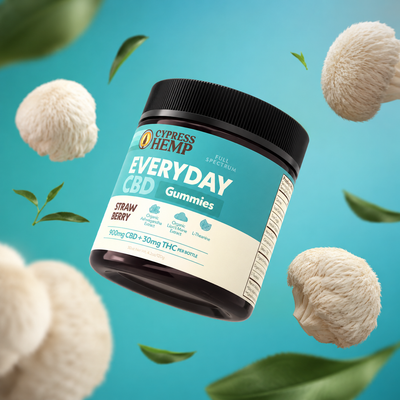
The argument for keeping the whole plant intact in full spectrum hemp is the entourage effect – which is the idea that hemp's compounds do more together than separately. At Cypress Hemp, we formulate our full-spectrum CBD products around this principle. Our guide to what full-spectrum CBD is explores this concept in more detail. The same thinking runs through our live resin gummies.
Full Spectrum CBD
Consistent, approachable, and easy to reach for every day
Shop NowSo, Which One Should You Choose?
Pick based on what you want it to do, because these aren't competitors.
Choose hemp seed oil if you're after nutrition. It's a nutrient-dense oil; a good source of healthy fats. You can use it for cooking or as a dressing. It may also help you improve skin health.
Choose CBD oil if you're looking for a cannabinoid-based wellness product rather than a nutritional cooking oil.
Here's the Caveat: You don't always have to choose! Most CBD oils on the market use MCT oil from coconut as a carrier, but we offer hemp heart oil as a carrier for our CBD + Omegas oils, so you get cannabinoids and the omega fatty acid profile in the same dropper.
Frequently Asked Questions
Is Hemp Oil the Same as CBD Oil?
No. Hemp seed oil comes from the seeds and contains no meaningful CBD. CBD oil comes from the flowers and leaves and contains cannabidiol as its active ingredient. Some brands label CBD oil as "hemp oil," so check the ingredients panel and the milligram count rather than trusting the product name.
Does Hemp Seed Oil Contain CBD or THC?
No to both, in any meaningful amount. Hemp seeds hold essentially no cannabinoids, so cold-pressed seed oil contains neither CBD nor THC. Trace amounts occasionally appear from resin transferring onto seed hulls during harvest, but not at levels that do anything.
Will Either Oil Make You Feel High?
Neither will. Hemp seed oil has no THC in it. Hemp-derived CBD oil is capped at 0.3% THC by dry weight under federal law, which isn't an intoxicating amount. Full-spectrum CBD can still show up on a workplace drug test, though, so choose broad-spectrum if you're planning to be tested.
Can You Cook With Hemp Oil?
You can cook with hemp seed oil, but don't heat it on a high heat. This will break down the polyunsaturated fats that make it worth eating. Use it cold on salads, in dips, or drizzled over food after cooking. Never cook with CBD oil, which is a supplement, not an ingredient.
Which Is Better for Skin, Hemp or CBD Oil?
They do different jobs. Hemp seed oil hydrates and absorbs without clogging pores, which is why it's common in moisturizers. CBD topicals pair hemp extract with botanicals for targeted application to a specific area. Our products use both.
The Bottom Line on Hemp Oil vs CBD Oil
Hemp seed oil and CBD oil share a plant and almost nothing else. Hemp seed oil is extracted from cold-pressed hemp seeds for nutritional purposes. CBD oil is extracted from flowers and belongs in your wellness routine. Neither is a substitute for the other, and the cheaper one isn't a bargain version of the expensive one.
Here's how to check which one you're getting: Find the milligrams of CBD, read the ingredients, and check the lab report.
These statements have not been evaluated by the Food and Drug Administration. This product is not intended to diagnose, treat, cure, or prevent any disease.
References
- Andrews, K. W., Gusev, P. A., McNeal, M., Savarala, S., Dang, P. T. V., Oh, L., Atkinson, R., Pehrsson, P. R., Dwyer, J. T., Saldanha, L. G., Betz, J. M., Costello, R. B., & Douglass, L. W. (2018). Dietary Supplement Ingredient Database (DSID) and the application of analytically based estimates of ingredient amount to intake calculations. The Journal of Nutrition, 148(Suppl. 2), 1413S–1421S.
- Bonn-Miller, M. O., Loflin, M. J. E., Thomas, B. F., Marcu, J. P., Hyke, T., & Vandrey, R. (2017). Labeling accuracy of cannabidiol extracts sold online. JAMA, 318(17), 1708–1709.
- Cerino, P., Buonerba, C., Cannazza, G., D'Auria, J., Ottoni, E., Fulgione, A., Di Stasio, A., Pierri, B., & Gallo, A. (2021). A review of hemp as food and nutritional supplement. Cannabis and Cannabinoid Research, 6(1), 19–27.
- Google. (n.d.). Recreational drugs. Google Ads Policy Help.
- World Health Organization. (2018). Cannabidiol (CBD) critical review report. Expert Committee on Drug Dependence, Fortieth Meeting.


